How to Look Up Land Values on Grimes CAD (Grimes County)
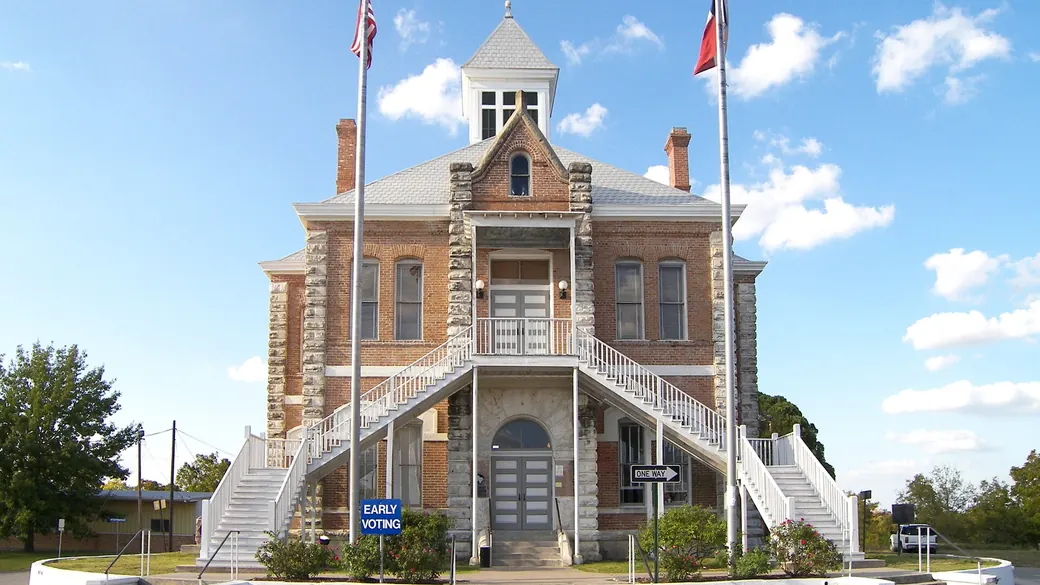
Short answer: Grimes County land is appraised by the Grimes Central Appraisal District (GCAD) in Anderson. Search it with the property search or Advanced Search on grimescad.org, or on GCAD's interactive GIS map. GCAD also collects taxes for Grimes County, the cities of Anderson, Bedias, Iola and Navasota, five school districts and ESD #1, and takes online payments with a 2.5% card fee or a $2.50 e-check fee. Its Common Misconceptions page clears up points sellers often get wrong: agricultural value is a special valuation, not an exemption; a small stand-alone tract usually needs to meet acreage minimums; you protest the value, not the tax; and a protest does not delay the delinquency date. GCAD's home page lists the next delinquent tax sale for December 1, 2026.
Grimes County sits between Montgomery, Walker, Brazos and Waller counties, with Navasota on Highway 6, Anderson as the county seat and pasture and timber land running toward the Brazos and Navasota rivers. Its appraisal district, the Grimes Central Appraisal District (GCAD), sets values and also collects taxes for most of the local units. So its site is where you check both the value and, for most accounts, the tax bill before you sell. This guide walks through both, plus the points GCAD itself says owners most often get wrong.
Find the tract
GCAD's property search is on grimescad.org: type a name, address or Property ID in the search box, or open Advanced Search for more fields. A few habits save time on rural land:
- The Property ID (GCAD also calls it the Quick Ref Number) on your notice or tax statement is the fastest search.
- Rural addresses are often missing or inconsistent. Search by owner or ID instead.
For a tract with no address, use GCAD's interactive GIS maps at gis.bisclient.com/grimescad. You can find the parcel on the map and open its account from there. GCAD's site also keeps archived maps from 2011 on.
The site's disclaimer says original records may differ from what you see online and that checking the source documents is recommended. Treat the acreage and legal description as a starting point. In a sale, the deed or a survey settles them.
What the value is, and how the tax is figured
The value is a market value as of January 1 (Tax Code Section 23.01). GCAD's Common Misconceptions page explains the bill in one line: market value minus exemptions, times the tax rate, divided by 100. It stresses that the tax rate, set by each taxing unit, is the main driver of the bill. The appraised value is only one part.
The same page answers questions sellers often ask:
- Does GCAD know what land sells for? Not always. Texas does not require sale prices to be disclosed, so GCAD gathers sales where it can, from brokers, buyers and sellers, and gets some but not all of them.
- Will GCAD post comparable sales online? No. The page cites Government Code Section 552.148, which limits sales data to the owner or their agent as protest evidence.
- Do taxing units ask GCAD to raise values? No. The chief appraiser must value property at market value as of January 1 using mass appraisal standards, and the Comptroller checks the district's values each year.
That last point is why a tax value and a real sale price often differ. For more on the gap, see appraisal value versus sale price.
Agricultural value: what GCAD says
Much of Grimes County is hay, cattle and timber land, so the agricultural valuation matters. GCAD is direct about two points:
- Ag is not an exemption. It is a special valuation based on what the land produces. The land still has a market value; the ag value is what qualifying acreage is taxed on.
- Size matters. A small tract can qualify if it is used together with a larger contiguous property. A stand-alone tract should meet typical acreage minimums.
If the use changes after a sale, Tax Code Section 23.55 adds a tax for each of the three years before the change, plus interest. GCAD's page also notes a special protest deadline when the district removes an ag valuation because of a change in use: before the 30th day after the notice is mailed. Our articles on rollback taxes on ag land and keeping an ag valuation as a new owner explain how buyers and sellers usually handle it.
What GCAD collects, and how to pay
GCAD's Common Misconceptions page lists the units it collects for: Anderson-Shiro CISD, Iola ISD, Madisonville CISD, Navasota ISD, Richards ISD, the cities of Anderson, Bedias, Iola and Navasota, Grimes County and Grimes County ESD #1. If your account shows a unit that is not on that list, check where that bill comes from.
The Pay Taxes Online page explains how to pay one account:
- Search for the property and open its details.
- Open the Bills tab to see the total due.
- Click Pay My Bills, or Make a Partial Payment and enter an amount.
- Finish on the payment site and print the receipt.
Card payments carry a 2.5% fee and e-checks a $2.50 fee. Each account is paid separately, and payments take 3 to 5 business days to show online. Mailed checks are payable to Grimes Central Appraisal District.
Late taxes and the tax sale
GCAD's calendar follows the Tax Code dates: values are set as of January 1, and by July 1 delinquent taxes carry a total 12 percent penalty, with an extra collection penalty possible on taxes still unpaid then. Two GCAD notes matter when taxes are behind:
- A protest does not stop the clock. If a protest is still open, you must pay the lesser of the tax on the value not in dispute or the amount due the year before, before the delinquency date. Otherwise you lose the right to finish the appeal.
- Tax sale payments. Once a property is posted for tax sale, the taxes, penalties, interest and costs can only be paid in U.S. currency, by cashier's or certified check, or by electronic funds transfer. No credit cards.
GCAD's home page lists the next delinquent tax sale for December 1, 2026 at the Grimes County Courthouse in Anderson and points to its delinquent tax collection law firms' sites for the lists. If your land is behind, our guides on how a Texas tax sale works and looking up the taxes owed cover the steps and options.
Homeowners 65 or older or disabled can defer taxes on the home they live in by filing a tax deferral affidavit with GCAD. The Pay Taxes Online page warns that a deferral only postpones the tax: past taxes, penalty and interest become due 181 days after the home no longer qualifies. It covers the home the owner lives in, not other land.
Ownership changes and combining tracts
GCAD will not change the owner on an account without a legal document, such as a deed or a will. For land still in a late parent's name, that usually means sorting out title first; our guide on land still in a parent's name explains the usual routes. GCAD also says tracts can be combined only when they touch, share the same owner, are in the same abstract or survey, and are on the same note or paid off.
Protesting the value
You protest the value, not the tax. Tax Code Section 41.44 sets the usual deadline: May 15, or 30 days after the notice is delivered, whichever is later. GCAD says late protests need good cause, a reason beyond your control, and the appraisal board that hears protests (the ARB) decides that. GCAD's site has an online protest page and a protest hearing database. For land, bring sales of similar tracts, photos of access or flooding problems and a survey if the acreage is wrong. Our guide on protesting a land value has a checklist.
GCAD's office is in Anderson, open weekdays 8 a.m. to noon and 1 to 5 p.m.
How we use it
With a Grimes County tract we read the GCAD account for the owner, acreage and any ag value, check the Bills tab for what is owed, and look at the GIS map for access and road frontage. Then we check flood maps near the rivers and creeks and nearby sales. See how we buy in the county on our Grimes County page. If you also own land next door, our Walker CAD guide and WCAD guide cover those districts.
Common questions
- How do I look up land in Grimes County, Texas?
- Use the property search or Advanced Search on grimescad.org, the Grimes Central Appraisal District's site. GCAD also offers interactive GIS maps at gis.bisclient.com/grimescad, which help when a rural tract has no street address.
- Does Grimes CAD collect property taxes?
- Yes. GCAD's Common Misconceptions page says it collects for Anderson-Shiro CISD, Iola ISD, Madisonville CISD, Navasota ISD, Richards ISD, the cities of Anderson, Bedias, Iola and Navasota, Grimes County and Grimes County ESD #1. You can pay online by card (2.5% fee) or e-check ($2.50 fee).
- Is agricultural value an exemption in Grimes County?
- No. GCAD says agriculture is not an exemption but a special valuation based on the land's agricultural productivity. Every property still has a market value. A stand-alone small tract should usually meet typical acreage minimums, though a small tract used with a larger contiguous property can qualify.
- Can I stop my taxes from going delinquent by protesting?
- No. GCAD says an open protest does not change the delinquency date. You must pay the lesser of the tax on the value not in dispute or the amount due the year before, or you lose the right to finish the appeal.
- When is the next Grimes County tax sale?
- GCAD's home page lists the next delinquent tax sale for December 1, 2026 at the Grimes County Courthouse in Anderson, and points to its delinquent tax collection law firms' sites for the property lists. Taxes posted for a tax sale cannot be paid by credit card.
Sources
- Grimes CAD home page
- Grimes CAD: Advanced Search
- Grimes CAD interactive GIS maps
- Grimes CAD: Pay Taxes Online
- Grimes CAD: Common Misconceptions
- Grimes CAD: Calendar
- Texas Tax Code Section 23.01: market value as of January 1
- Texas Tax Code Section 23.55: change of use of land
- Texas Tax Code Section 41.44: protest deadline
Related articles
 How to Look Up Land Values on Washington CAD (Washington County)
 How to Look Up Land Values on Fayette CAD (Fayette County)
 How to Look Up Land Values on Trinity CAD (Trinity County)

Got it. Thank you. A real person will call you back.